


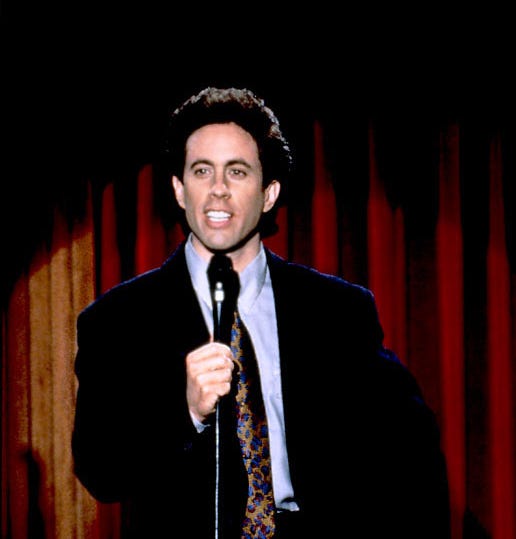
woke 1.0 was crazy.
i mean, it’s still crazy, but it used to be crazy, too.
the phrase is a sign of the times, an astonishing about-face. the throwing around of “Woke One” is not so much the writing on the wall as it is a big, fat, ugly graffiti tag on the side of a subway car. after spending the better part of two decades as the undefeated heavyweight champion of the american cultural sphere, social progressivism has suddenly found itself on the ropes. there’s blood on the mat, the ref's starting to count. hey, the kid had a good run.
you would be hard-pressed to find a leftist satisfied with the state of affairs today. transgender people are getting banned from the military and sports teams, colleges are shutting down their DEI offices, the federal government has all but declared open season on affirmative action, and hell, Trump is the president again after getting kicked out in 2020 — so on and so forth. there are as many opinions and hot takes on these matters as there are shades of paint at your local Sherwin-Williams, but there is no denying that progressive politics is in retreat. the national mood has shifted so much, in fact, that the people who once might have defended the general project are now comfortable joking about its earlier incarnation as something faintly embarrassing.
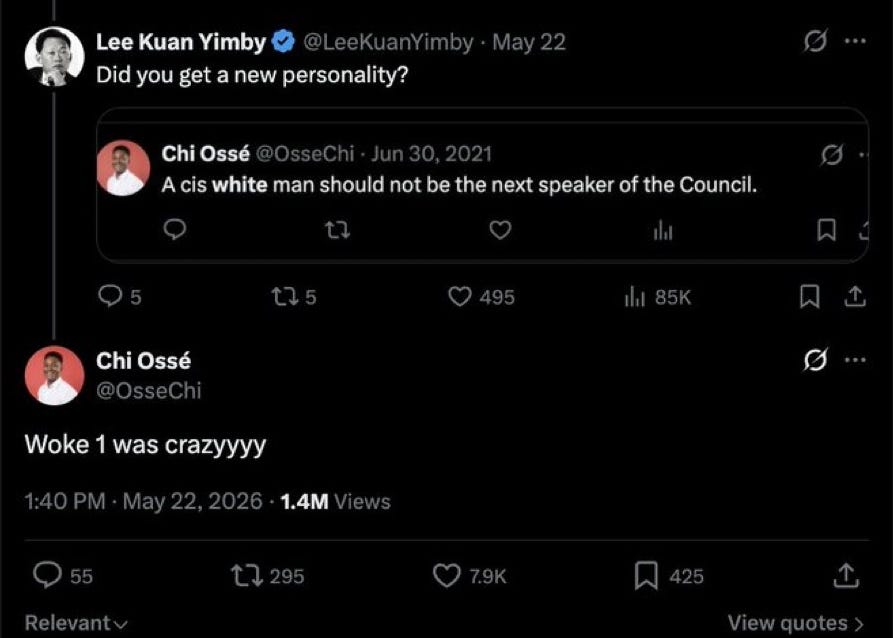
the nebulous term is obviously meeting some need in the social marketplace. so, where did it come from? what does it mean? and what is it doing for the people who use it?
really, the term “Woke 1.0” is doing a lot of different things at once — but at its core, it’s just an old trick for a new dog.
first, it divides two sources of tension within a single concept.
call it Woke 1, Woke 1.0, the first woke, whatever. the phrase lets people point at the insane, cruel, or simply embarrassing excesses of the cultural moment, except now discussed with the bemused distance normally reserved for a bad season of television. nobody seems entirely sure where woke 1 began, where it ended, or what exactly woke 2 is supposed to be, but everyone agrees the first version was apparently a little much. it lets you talk about some of the most consequential historical events or policy decisions like a regrettable night of drinking.
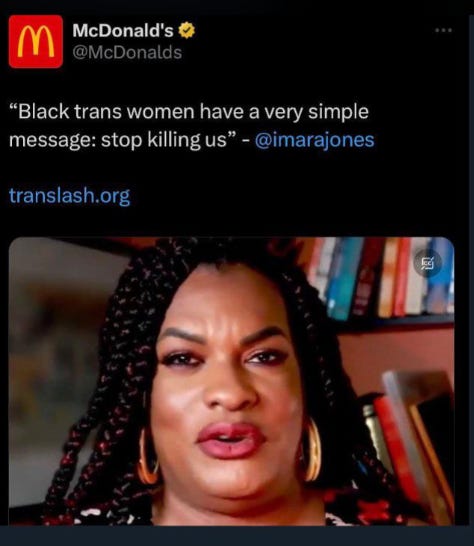
but the moment you start saying “Woke 1.0,” like it’s a software release, immediately you create several versions of the thing where previously there was only one. you’re implying that there’s a Woke 2.0, or a Woke beta, or a Woke “Mountain Lion” edition — whatever the specifics, there are now different “wokes” to talk about. maybe Woke 3.1.7 will finally fix the police. i’d love to see what those patch notes look like.
calling it “Woke 1” constructs an artificial historical boundary. the objectionable behavior belongs to a completed phase, even if the institutions, personnel, or assumptions behind it remain in place. it is developmental, rather than terminal. “When you say woke, do you mean Woke 1 or Woke 2? Just so we’re clear.”
this is what is usually referred to as “rhetorical dissociation” by people who study argumentation theory or public relations. according to academic M.A. Van Rees,
“In dissociation, the speaker splits up a notion considered by the audience to form a unitary concept into two new notions, one of which comprises the aspects of the original notion that the speaker considers real or central (term II), the other, the aspects that he considers apparent or peripheral (term I).”1
it doesn’t even really matter what “woke” means to you or anyone else; you have already created a break between what it may be commonly understood to mean (bad) and what you want it to mean (good). if there were any problems with the original “woke,” it’s irrelevant, because the criticism can be deflected away using the distinction between the “old” woke and the “new” woke. It was a bug, it’s fixed, it’s a whole newer, cleaner version — and this is the version you support, of course. the software language (if you choose to use it) does extra work, too, by letting the speaker treat critics as out-of-date or clueless: “Bro, what? Are you still on Woke 1.0? You gotta update that shit. Try to keep up, old man.” it’s a nice touch.
a second function of “Woke 1.0” is even more useful: it separates the movements discredited manifestations from the people and principles that produced them. or, less formally, no one wants to own a disaster. there’s a familiar form of public relations at work here: make the failures belong to a few bad apples who got carried away, and the people and principles that championed them get to present themselves as the put-together alternative who kept the lights on despite it all. where rhetorical dissociation makes a split in the concept, it makes a split in responsibility possible: “we don’t need to answer for those guys.”
after all, the phrase really only broke out of Twitter containment and into the national political conversation when Congresswoman Alexandria Ocasio-Cortez repeated a line used by her friend, New York City Councilman Chi Ossé: “Woke 1 was crazy.”
in the interview with ABC, Ocasio-Cortez was questioned about Wisconsin candidate for governor Francesca Hong’s old calls for things like abolishing police and prisons. in response to the criticism, AOC argued that voters should judge what the candidate says now, not back then. when the interviewer questioned AOC’s own past stances on matters like defunding the police, she replied the rhetoric of that period was not rhetoric she would use today, but described its policy discussions as “fruitful.”
to people in power like AOC and her friends, the term seems attractive as the shiny new political equivalent of a tax write-off for the massive losses they’re incurring in the present political climate — one now filtering down to a public all too eager to use it as a mechanism to mock obvious lunacy that would have been denounced as blasphemy not that long ago.
but if you press the people using the term, though, few could earnestly tell you the difference between “woke 1.0” and whatever version we’re on now. woke 1.0 sucked, huh? which part are you now willing to condemn? anything of note? if woke 1 was sooooooo crazy, which of its beliefs have been given up? which of its central judgments were false? what did its institutions do that should not be repeated? who was injured, and what is owed to them? if no answer is forthcoming — if the concession extends only to aesthetics, messaging, or electoral inconvenience — then the doctrine has clearly not been reconsidered. its liabilities, the chosen few patsies, have merely been sacrificed to save a hide or two.
in fairness, language legitimately often does lag reality, and people's views can genuinely change with time and evidence — that much is true of everyone, not just politicians in retreat. but that only makes the test more useful, not less: a real change of mind can survive being asked what, specifically, it changed about.
and in fact, this elusiveness is precisely the reason that many on the more hardcore contingents of the American left wing — think Marxist-Leninist tankies, black power groups, more extremist-minded queer advocacy organizations, and the like — have also rejected the “woke 1.0” label and how AOC earned their ire. these purists don’t see anything broken to fix, and take the insinuation there is as betrayal of “the cause.” they’re refreshingly honest in this respect because they’re not interested in compromises.
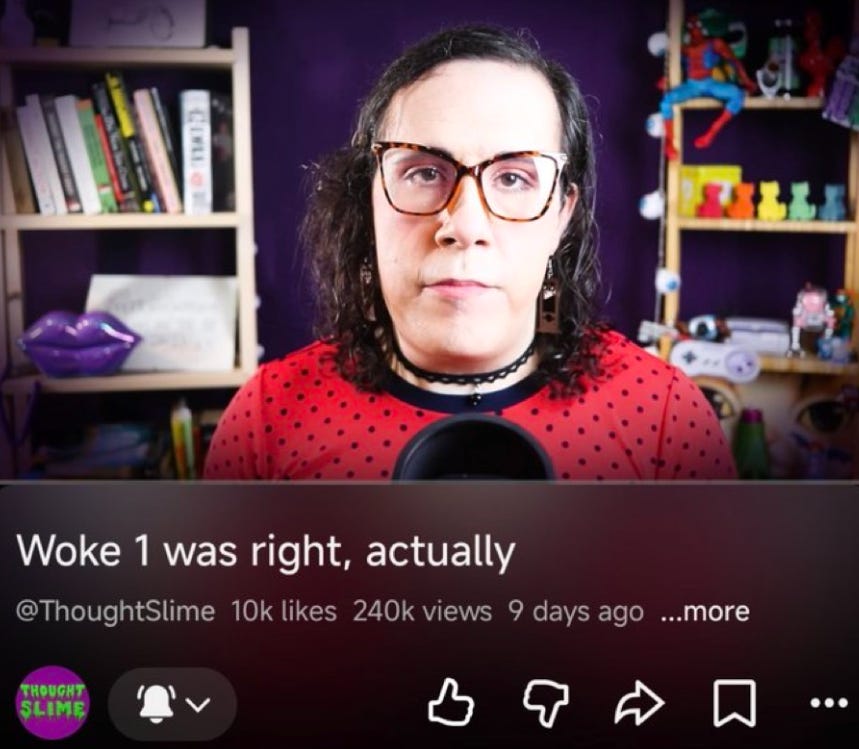
maybe the person using the phrase has answers, maybe they genuinely changed their mind, maybe they always disliked the excesses and now finally has a catchy name for them, or maybe they are simply making a joke. but the phrase itself does not tell you any of this or anything about them — that is the genius of the maneuver.
this type of pivot is tried and true.
consider the following historical example: in 1956, Nikita Khrushchev stood before the Soviet Communist Party and explained that Stalin’s reign of terror had been a monstrous betrayal of Leninism. Stalin and his cult of personality were the problem; the Party and its principles were the cure. conveniently, Khrushchev had spent the years in question rising through that very Party, apparently perfectly legitimate at the time, and participating in its purges. Stalin was, of course, stone cold dead, so he couldn’t object to being handed the entire bill. the men still in the room could denounce what happened, promise a return to the “real” thing, and carry on running the show.
we also see such historical revisionism in Red China after Mao, or after the Reign of Terror in revolutionary France. hell, we even see it in baseball after the ‘90s-2000s steroid era: a few famous sluggers like Barry Bonds became the face of a problem the whole league had helped create and perpetuate. America is already beginning to perform this little trick on its own, extremely recent past. the comparison here is obviously one of rhetorical structure, not moral magnitude. that wasn’t “real” communism; that was Stalinism. that wasn’t the revolution; that was the Terror. that wasn’t woke; that was Woke 1.
the person who would take food out of your children’s mouths for saying “I don’t support defunding the police” just a few years ago has gone from “Fuck you, fascist,” to “Wow, 2020 was pretty wild, huh?”
right.
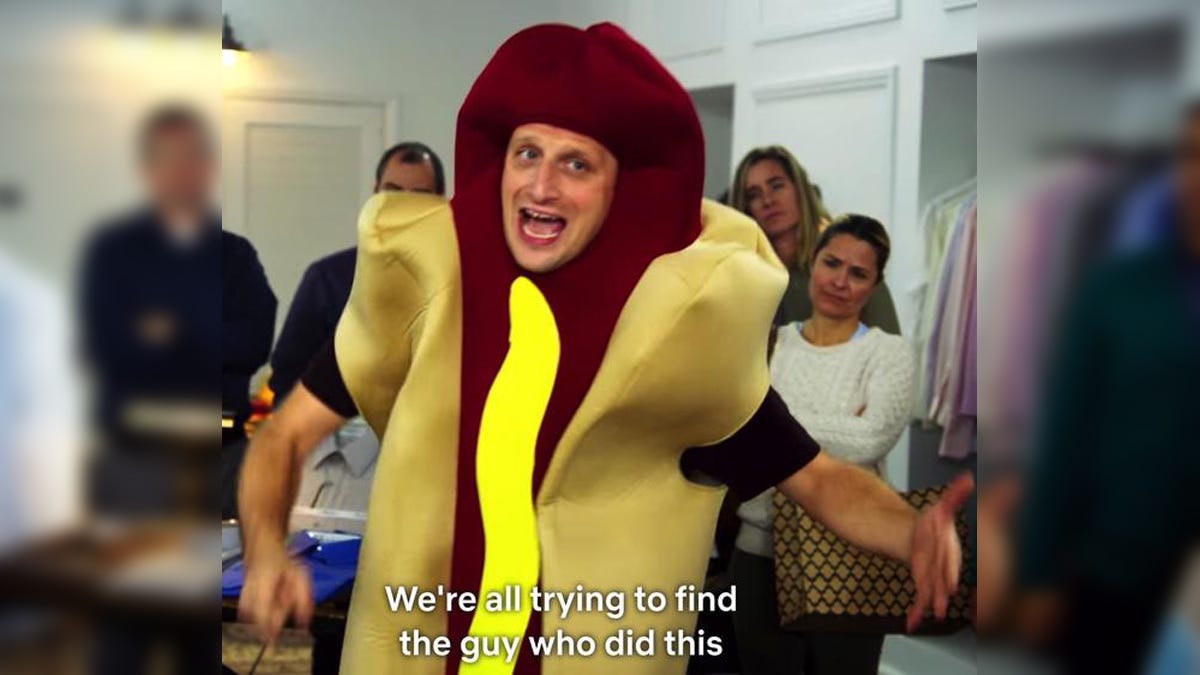
the third immediate observation from a term like “Woke 1.0” is it can close the distance between the speaker and an audience that has learned to distrust him. these partial concessions rebuild identification with a hostile or hesitant audience and open the door to continued influence.
the politician with a damaged brand has a problem familiar to every salesman: you can’t make a pitch to somebody who won’t give you the time of day. so, he doesn’t start by defending the product. he might lean over the counter, lower his voice, and say,
“Between you and me, Woke 1 was crazy.”
now he sounds less like one of the people you’re angry with and more like somebody who was angry with you all along. he can laugh at the excesses alongside you. he can shake his head at years like 2020 as if the two of you watched it happen from opposite ends of the bar.
that little concession buys him a hearing with a lot of people. an adjective like “crazy” is vague enough that everybody can hear an apology for the particular thing that pissed them off, while the speaker remains free to mean something much more narrow. it sounds expensive — he’s criticizing his own side, after all — but what has he actually given up? “crazy” could mean a lot of things: the ideas were wrong, the tactics were cruel, or it might only mean the whole business got embarrassing and cost somebody an election, like Wisconsin gubernatorial loser Francesca Hong. until he says which, he gets credit for the admission without having to get specific. using this maneuver, the speaker can concede an interpretation presented as marginal while defending the one he sees as central.
the bottom line is: has he really, genuinely expressed your opinion, or merely enough of what he thinks your opinion is to regain your attention?
2020 was six years ago. those records haven't vanished, not by a long shot. people who participated in that political moment are still around. yet we're already inventing terminology that permits Americans across the political spectrum to speak about it like a distant historical epoch: Woke One. and i imagine finding somebody who actually participated in it will look a lot like the fucking Warren Commission - the bastard acted alone.
see: M. A. van Rees, “Dialectical and Rhetorical Effects of Dissociation,” in Dissensus and the Search for Common Ground: OSSA 2007, ed. H. V. Hansen, C. W. Tindale, J. A. Blair, R. H. Johnson, and D. M. Godden (Windsor, ON: Ontario Society for the Study of Argumentation, 2007), 1, https://pure.uva.nl/ws/files/4148214/144851_660_vanRees.pdf.