

should we start killing journalists?
an exploration of journalistic malpractice in the 21st Century | OPINIONS

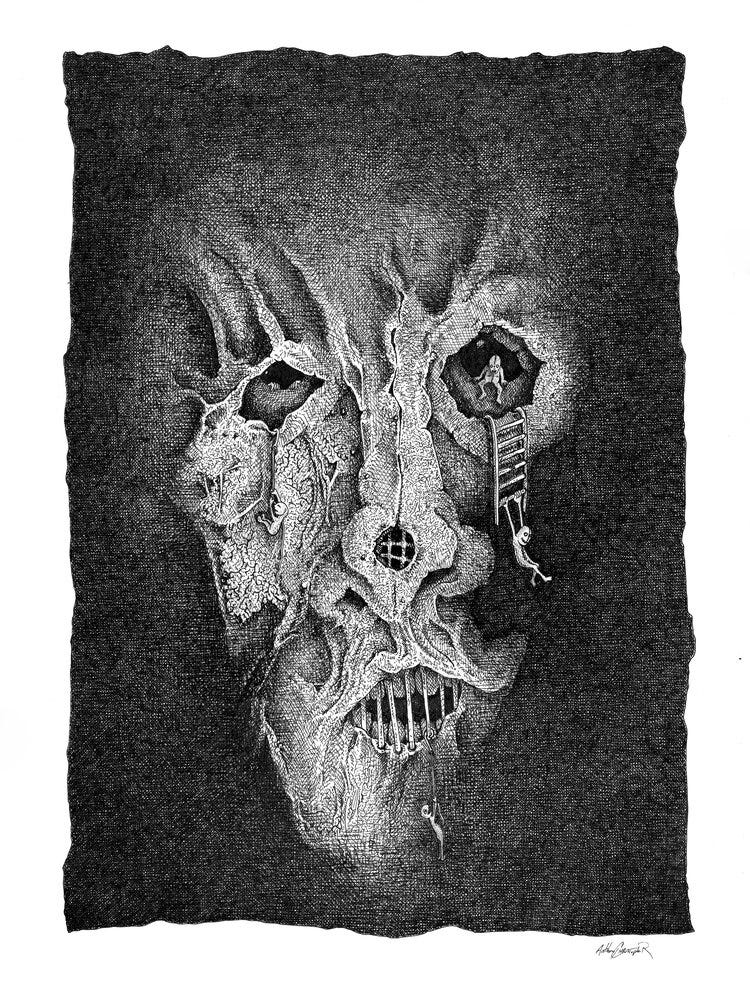
INTRODUCTION
Ok, to be clear, I’m not serious. I’m not ACTUALLY calling for a bloodbath, no matter how much the thought of throttling some hack with a byline feels like sweet, sweet justice to my caveman brain. For all intents and purposes, I’m journalist, though that may be using the term a little liberally for some tastes.
Forgive my twisted little jest to jolt you awake. Hey, I’m crazy, but I’m not that crazy. But I must admit that I do, on occasion, enter into a murderous rage when I see journalists play stupid.
Their malpractice, their lazy, self-serving distortions, ignite a fire in me so hot it could power the Delaware Valley for a decade.
But I haven’t killed anyone (yet). So, the real crime we’re investigating here isn’t murder. It’s the slow, deliberate assassination of truth by ink-stained, cocaine-fueled charlatans who’d sell their souls for a clickbait headline or a handful more viewers tuning in to their program: to use a turn of phrase, feigned ignorance. And if we can’t kill the bastards, we can at least expose them.
‘25 KILL ‘EM ALL
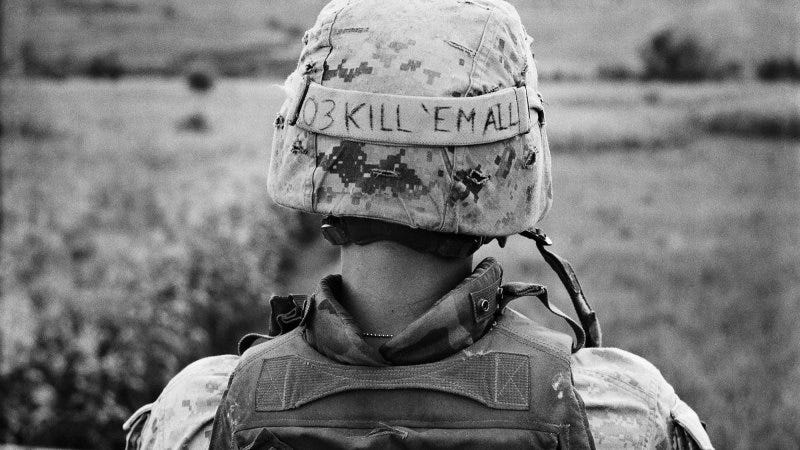
It is easy to dismiss these types, as many do, simply as stupid, but that position to me seems hard to reconcile. For one, there’s the fact that many of these people who call themselves journalists are graduates, with honors, from prestigious institutions like Harvard, Yale, the Columbia School of Journalism, and others.
You also have to consider the fact that they’ve even gotten to the positions they occupy. Sure, it’s possible to fail upward or cheat your way into becoming something prestigious, like a news anchor for a network that broadcasts not just nationally, but internationally (for example, CNN provides syndicated versions of its American broadcasts to 200 countries and territories and in 26 different languages) or the top editor at the Wall Street Journal, the most widely circulated newspaper in the United States, but it doesn’t seem likely.123 These people are the 1% of the 1% of the 1%.
This is what makes the “We got it wrong” act all the more infuriating; I’m not picking on some correspondent for the local high school paper, for Christ’s sakes. These are people who make a lot of money and most definitely know what they’re doing.
So, why do they get it wrong? And who and what exactly am I talking about?
Well, the phenomenon I’m attempt to describe could be attributed to any number of journalists or stories out there, but right now, I’m talking about Jake Tapper.
Tapper is a widely-respected journalist. He hosts a show on CNN, has published 6 best-sellers, and was once described as “perhaps [CNN’s] most respected anchor,” which may or may not be saying very much depending on your perspective.4
Tapper has done some very valuable work and coverage; I don’t seek to diminish his accomplishments. However, he is most definitely guilty of feigning ignorance.
In a 2020 interview, Tapper aggressively shot down claims from Lara Trump that President Biden was suffering from cognitive decline, as shown below:
These days, though, Tapper has changed his tune. In fact, he’s gone as far to publish an entire book, titled “Original Sin,” about how Biden’s mental frailty was covered up by the media and by the administration. The book, which was an instant sensation upon release and quickly became a New York Times #1 best seller, was a dramatic 180 on the positions he had so zealously and self-righteously defended prior.
To his credit, Tapper has apologized to Lara Trump for the interaction above.5 But this series of events brings to mind the phenomenon I’ve noticed across the media spectrum I think deserves to be pointed out - the tactical use of “feigned ignorance.”
Much of the denial in the media regarding Biden’s cognitive abilities relied on the fact that there was no positive evidence to support it. To an extent, this was true: there was no “smoking gun” medical report or test result indicating that Biden had been diagnosed with anything. Biden had a stutter growing up, which, possibly reappearing in his old age, could easily explain the origin of a number of his gaffs as president (though not all of them). And you also had to consider that many of the people shouting that Biden was a dementia-riddled geezer were much of the same crowd who had claimed Obama wasn’t an American citizen in 2008; their credibility wasn’t exactly outstanding.
However, the press also didn’t do very much to investigate if these claims, which first cropped up as early as 2020, were true.
Let’s try a contrived thought experiment: police receive a report from a local asshole that someone was robbed or murdered or stabbed; they should, in theory, investigate the crime, regardless of who reports it, and its veracity. But if they refuse to investigate, and instead simply claim “there is no evidence of a crime,” we would rightly dismiss them as fools and probably call for heads to roll.
The media dismissed circumstantial evidence - the bizarre behavior Biden exhibited while President and reports in passing of concerns from people within the administration - without investigating further, choosing instead to take the administration at their word, which was that Biden was healthy as a horse. The responsibility of reporting and challenging such claims was then left to right-wing hacks on Fox News and YouTube. As it turns out, the hacks were right.
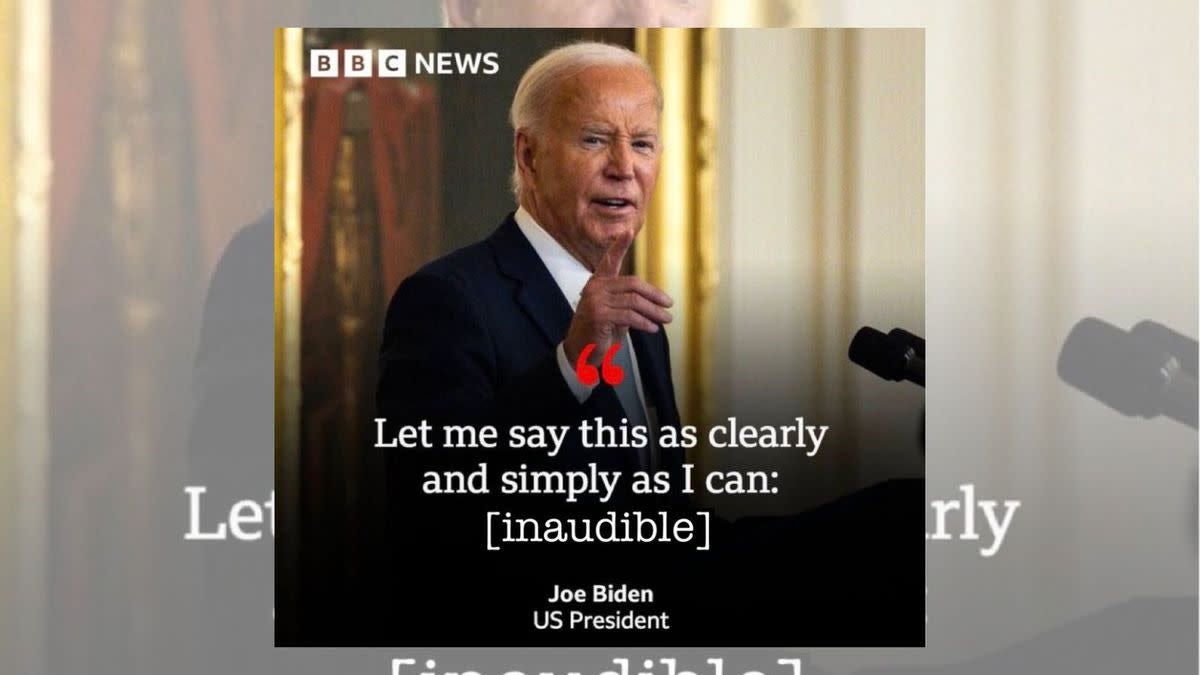
By any measure, it was a massive failure on the part of the press.
But the performance of “ignorant journalist” makes a lot more sense when you realize it’s exactly that - a performance. It seems pretty bad to say that you didn’t know what was happening when you get paid six figures (or more) to do exactly that, but once you understand it as a strategic, deliberate move to manipulate public opinion, it begins to have a certain pragmatic logic to it that typically ends with relatively little professional or social repercussions for those involved.
For starters, it’s an easy method to mitigate responsibility. It’s one people at the center of public scandals use all the time - for example, a CEO might claim they didn’t know about unethical practices in their company, pointing to subordinates instead.
By shifting blame, journalists attempt to shift your anger from them to their source. “The source lied to me, but I told you these lies because I trusted them. Sorry!”
This helps them maintain their public image and paint themselves as ignorant or even incompetent, rather than malicious or complicit.
But of course, like a CEO, journalists are still responsible to their customers or audience, even if the falsehoods or mistakes didn’t come from them directly. That said, if they were real journalists, they presumably would have done their due diligence to fact-check and critique the claims at hand (as they frequently do with claims from honest stories that actually challenge government authority - just look up “Gary Webb” or “CIA-Contra-Crack Cocaine Controversy”) rather than accepting them at face value, or at least provide a countering point of view.
Either way, it’s extremely disingenuous.
Take, for example, what could possibly be considered the case study in feigned journalistic ignorance.
SHOCK AND AWE
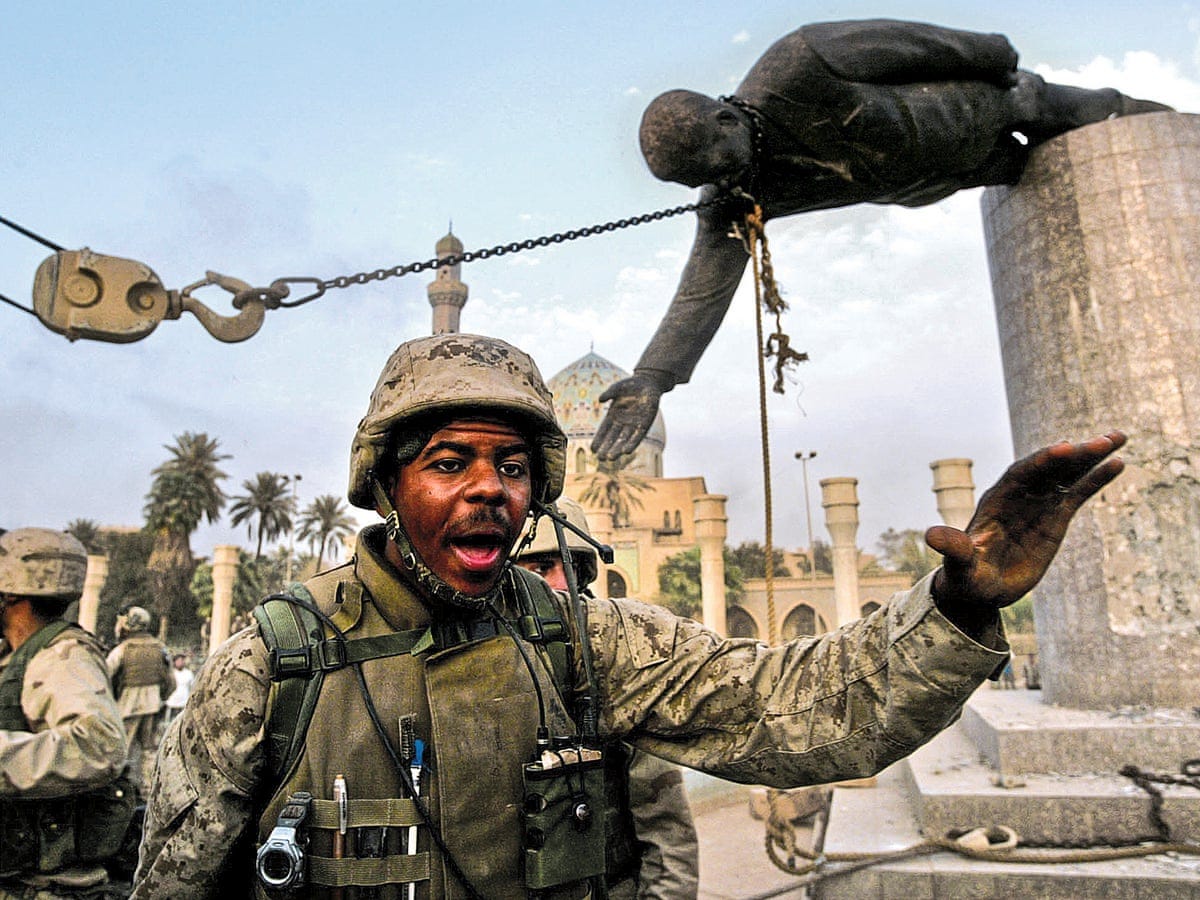
In the buildup to the invasion of Iraq, the Washington Post’s editorial board and reporters (among other outlets) published piece after piece supporting the invasion, echoing Bush Administration claims about Iraq’s WMDs and the threat Saddam Hussein posed to world peace. They were not alone in this, but they were definitely one of the biggest culprits.
"It is hard to imagine how anyone could doubt that Iraq possesses weapons of mass destruction," said one Post article in 2003.6
Former Post Pentagon correspondent Thomas Ricks later stated that:
“The paper was not front-paging stuff. Administration assertions were on the front page. Things that challenged the administration were on A18 on Sunday or A24 on Monday. There was an attitude among editors: Look, we’re going to war, why do we even worry about all this contrary stuff?”7
Of course, post-invasion, when the claims about Iraq’s WMDs were now plainly false for all to see, the Post formally acknowledged an “overreliance” on official sources and a failure to critically analyze their reports. But, they deflected blame by emphasizing the intelligence community’s failures, rather than their own lack of skepticism and rigor.
In 2004, the Post’s editorial staff went as far as make a miserable little formal apology for its coverage, stating that it "did not pay enough attention to voices raising questions about the war."8 But, of course, the damage was already done.
The Post, who, like a happy little drummer boy, had been beating the drums of war right up until the point that bombs began to rain down over Baghdad, now claimed that they were victims, misled by the same faulty intelligence as the government. They framed their role as passive, rather than actively complicit, in pushing a flawed narrative that many people in high places stood to benefit from. This, of course, made the Post out to be good guys (or at least, the innocent guys), and ignored their failure to challenge any of their anonymous sources or highlight dissenting voices that piped up, such as UN inspector Hans Blix who publicly and loudly contradicted WMD claims long before the invasion.
Perhaps Dick Polman for PBS/WHYY put it best:
“….mainstream outlets (led in those days by The New York Times, The Washington Post, and the TV networks) behaved not as watchdogs, but as lapdogs.”
The blatant falsehood of the premise for the invasion of Iraq and its widespread acknowledgment by both media and government sources easily makes it the most convenient example to point fingers at, but it’s far from the only one. In fact, it happens quite a lot; and now, as we know, it has happened again with the media’s coverage of President Biden’s mental decline. It’s a systemic issue: media as a machine that amplifies lies for profit or power.
And why, why do these so-called truth-seekers play dumb when the stakes are sky-high?
Journalists like Jake Tapper and the Washington Post’s war-drumming scribes don’t just stumble into falsehoods; they’re tethered to a system where access is king and criticism comes with a leash. Piss off the wrong suit, and your pipeline to a “senior official” scoop dries up faster than a Baghdad oasis. The FBI, the Pentagon, the White House - they dangle exclusive leaks like catnip, but only if you play nice. Cross them, and it’s not just a personal problem; your whole outlet might pay. Take NBC, cozy with its parent company Comcast, which thrives on government contracts and regulatory nods. If their newsroom hammers the FBI too hard, those juicy exclusives for their police procedural scripts or defense contractor ad dollars could vanish. Same went for the Iraq War cheerleaders - question the WMD narrative, and you’re locked out of Rumsfeld’s briefings, left scooping crumbs while your rivals feast. It’s a devil’s bargain: feign ignorance, parrot the line, and keep the access flowing. “Who benefits,” you ask? Who doesn’t?
The answer to “Cui bono?” is the power brokers, always. The Bush administration needed a war; the media delivered. Biden’s team needed a hail mary; Tapper & friends obliged. Every dodge, every “we didn’t know,” helps cement the agenda - and pad the pockets - of the elite, whether it’s defense contractors cashing in on Iraq’s chaos or networks raking in ratings from a opaque presidency, it doesn’t matter.
The government gets its megaphone, corporations keep their bottom line, and journalists cling to their bylines while the public lies prone, choking on their tall tales.
Journalists may view the strategy of the simple white lie or taking shortcuts to publish a story as harmless. It’s not.
Governments get it wrong all the time, whether it’s the result of an ulterior motive or genuine mistake. Journalists therefore have an duty to question the claims a government makes.
In the case of the invasion of Iraq, these “white lies” led to the deaths of approximately 100,000 innocent civilians and created yet another failed state in the Middle East that neither effectively cares for its people nor prevents widespread violence against them.
In the case of Biden, it helped get a person who was apparently not cognitively well enough for the job elected to the highest office in the land and ran interference as other people in the administration made decisions on behalf of a President who couldn’t.
Where will it end? I don’t know, but I can tell you when - probably not any time soon.
Until we demand journalists trade their white lies for hard truths, we’re all just pawns in their next war or election.
https://cnnpressroom.blogs.cnn.com/cnn-fact-sheet/
https://commercial.cnn.com/our-solutions/distribution/#:~:text=We%20offer%20the%20latest%20in,Discovery%20content.
https://pressgazette.co.uk/north-america/top-25-us-newspaper-circulations-2024/
https://www.thewrap.com/cnn-lineup-changes-jake-tapper-analysis/
https://www.usatoday.com/story/news/politics/2025/05/20/jake-tapper-lara-trump-apology/83753894007/
https://www.theguardian.com/world/2004/aug/13/pressandpublishing.usa
https://www.democracynow.org/2004/8/13/washington_post_admits_it_buried_anti
The Guardian, “Washington Post apologises for underplaying WMD scepticism.”