


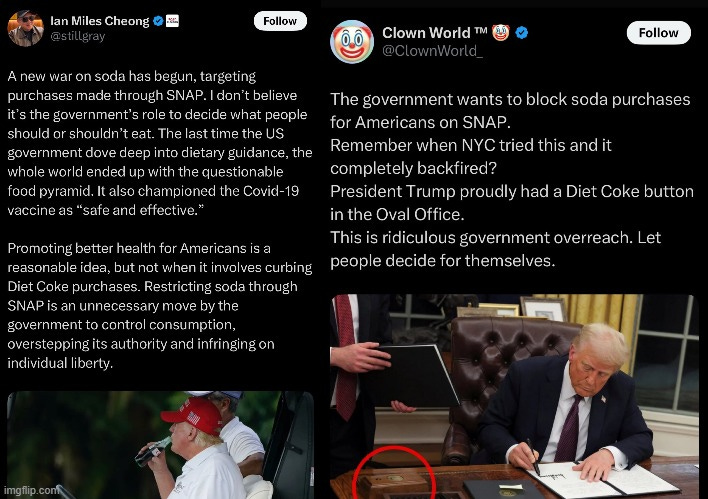
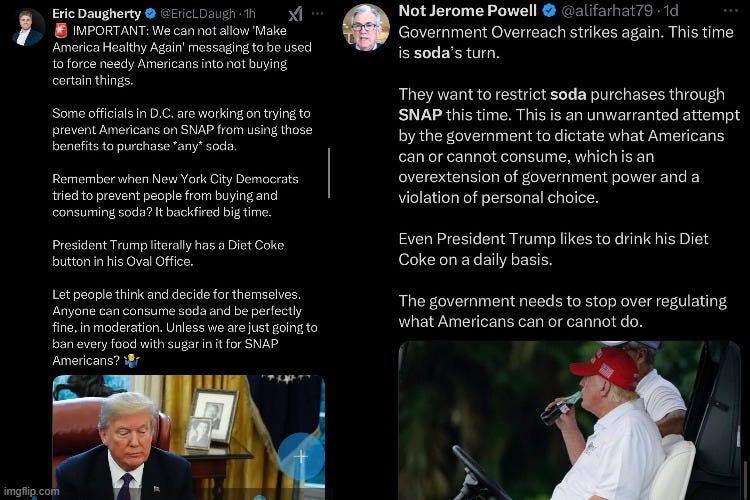
The right-wing Twitter-sphere was turned on its head this week following accusations that major right-wing influencers, including Ian Miles Cheong (1.2 million followers), Clown World (3 million), Eric Daugherty (396.2k), and Not Jerome Powell (596.7k), among a number of others, were paid by PR firms related to the soda industry in exchange for posting online their opposition to HHS Secretary Robert F. Kennedy Jr.’s latest proposal to remove soda as an eligible item under the SNAP food assistance program. “We shouldn’t be subsidizing people to eat poison,” Kennedy said in a recent interview with FOX News.1
One post among many in the recent firestorm online came from Nick Sortor, who alleged that influencers were being paid “upwards of $1,000” per post in exchange for posts against the proposed soda ban:
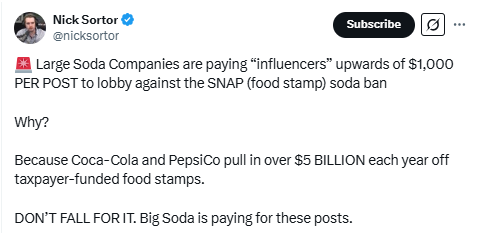
Several of the following posts were used throughout Twitter as examples of manufactured support against the ban:
SNAP expenditures on soda are responsible for approximately 20-25% of all Coca-Cola and PepsiCo revenues in the United States.
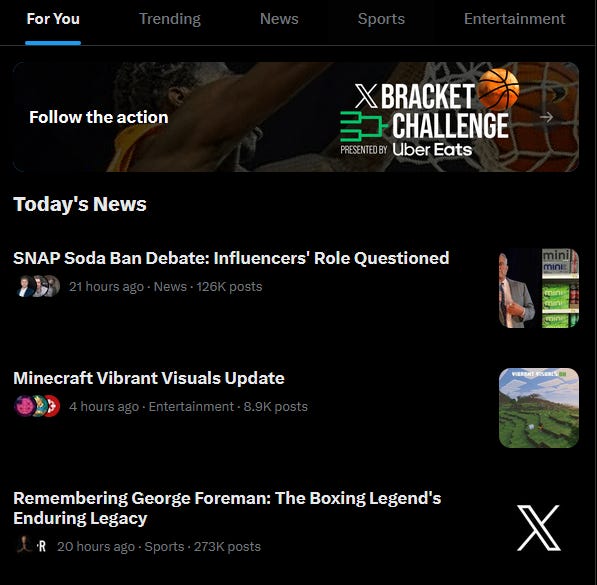
It’s unclear who first proposed the pay-to-play hypothesis online; however, the idea quickly snowballed in popularity after numerous, popular right-wing posters all made similar posts coming out against the proposed change, all around the same time (see above). This quickly aroused the suspicion of commentators online and became one of Twitter’s most discussed topics with 126k posts as of March 22, 6:00 EDT:
Riley Gaines, a conservative activist, podcaster, and former collegiate swimmer who became famous after protesting the introduction of transgender women into college swimming and now possessing 1.5 million followers, confirmed on March 22 via Twitter that she had been approached to make similar posts but had rejected them:
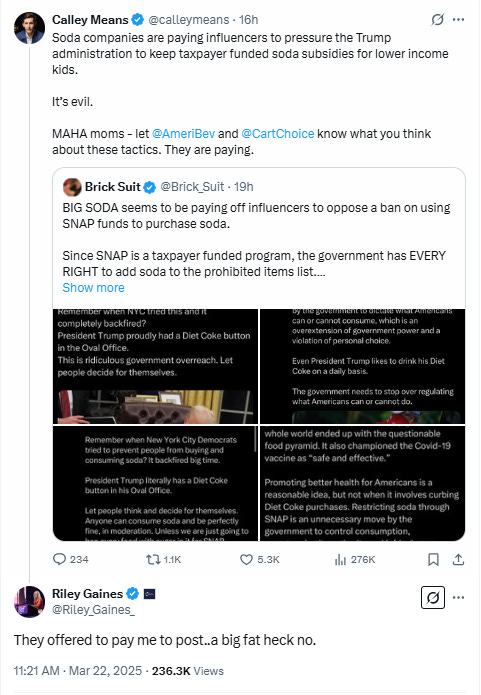
Gaines did not elaborate on who may have offered her the compensation in exchange for her support of soda remaining on SNAP benefits, or how much was offered.
Another large account on Twitter, Crémieux, stated that a friend had disclosed to them that someone had approached her to oppose the proposed SNAP change in exchange for money:
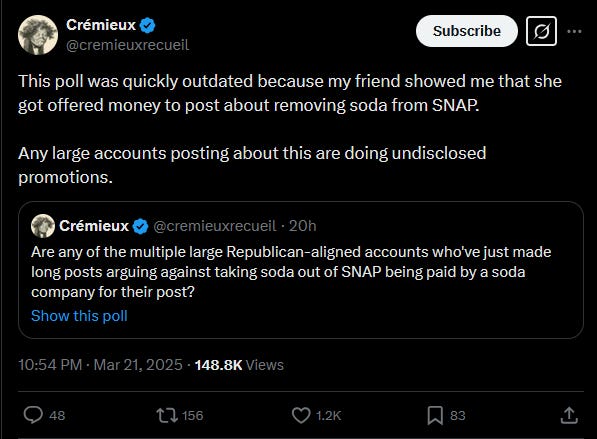
It’s unclear whether the individual in question is also Riley Gaines.
Earlier tonight, Nick Sortor also posted a thread alleging that these influencers were contacted by Influenceable, a company that states it is “an influencer management platform and agency used by brands, organizations, and campaigns in the anti-woke economy.” Influencers were supposedly given templates that were designed to make the SNAP change “feel as if banning soda from SNAP would be anti-Trump:”
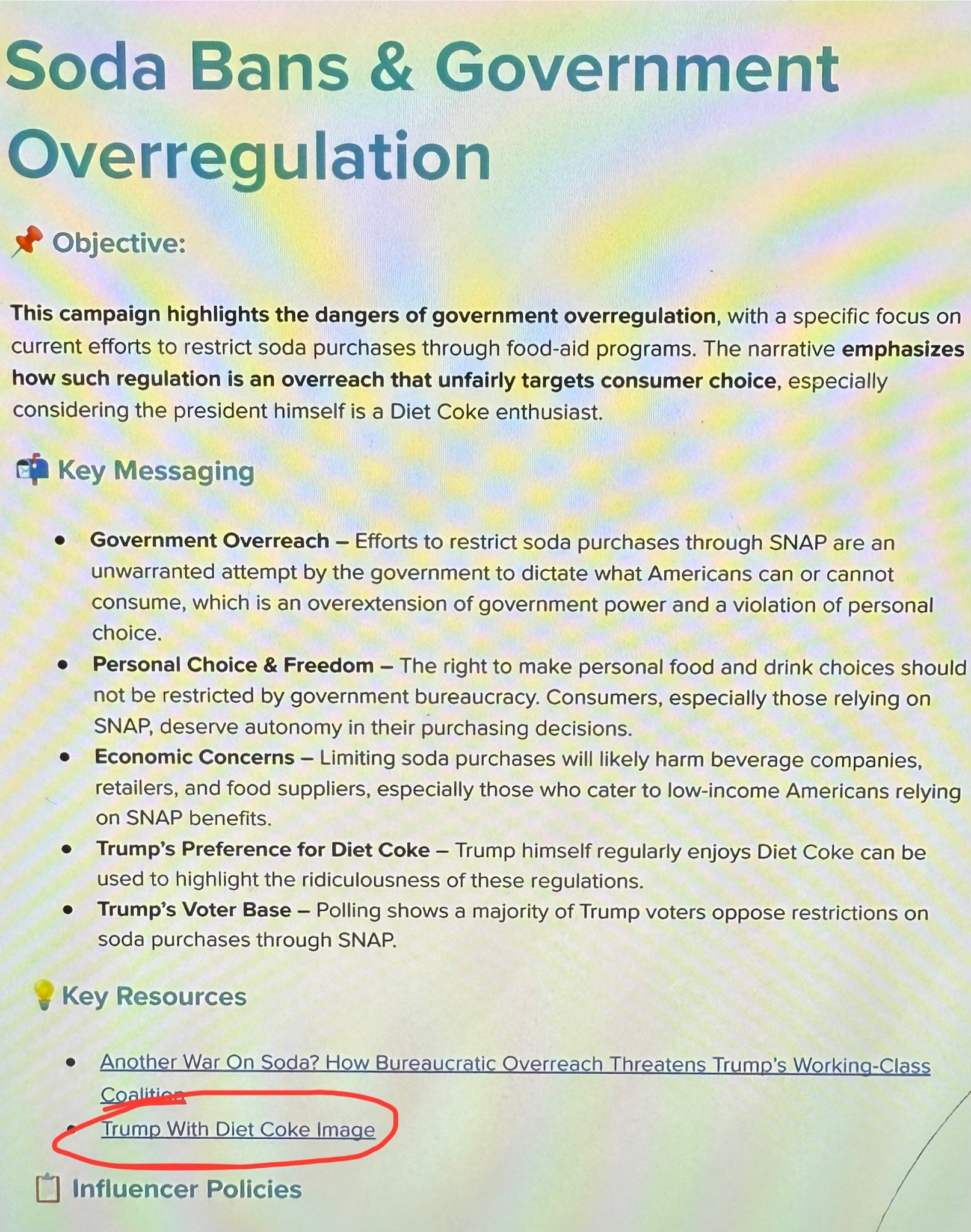
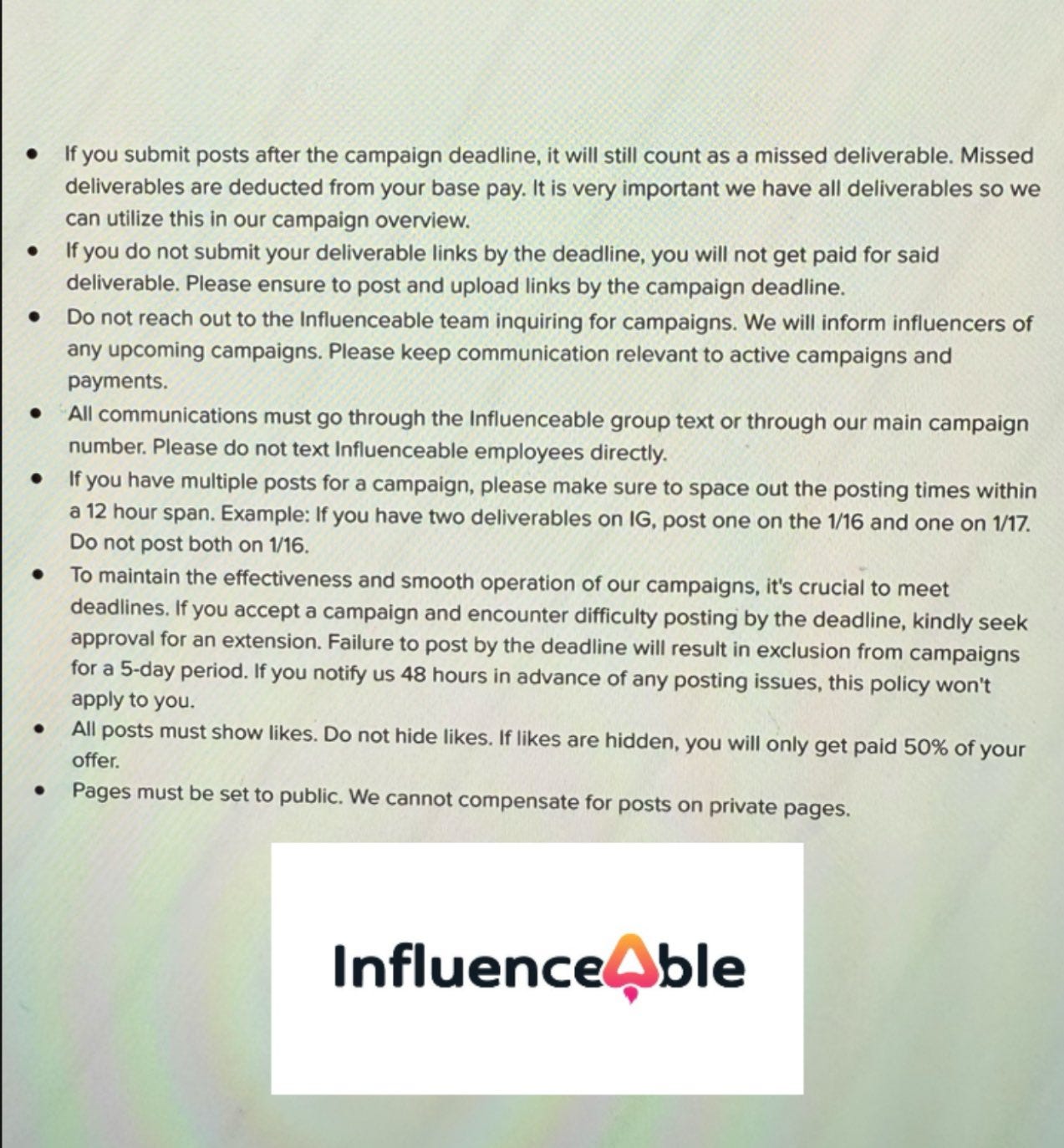
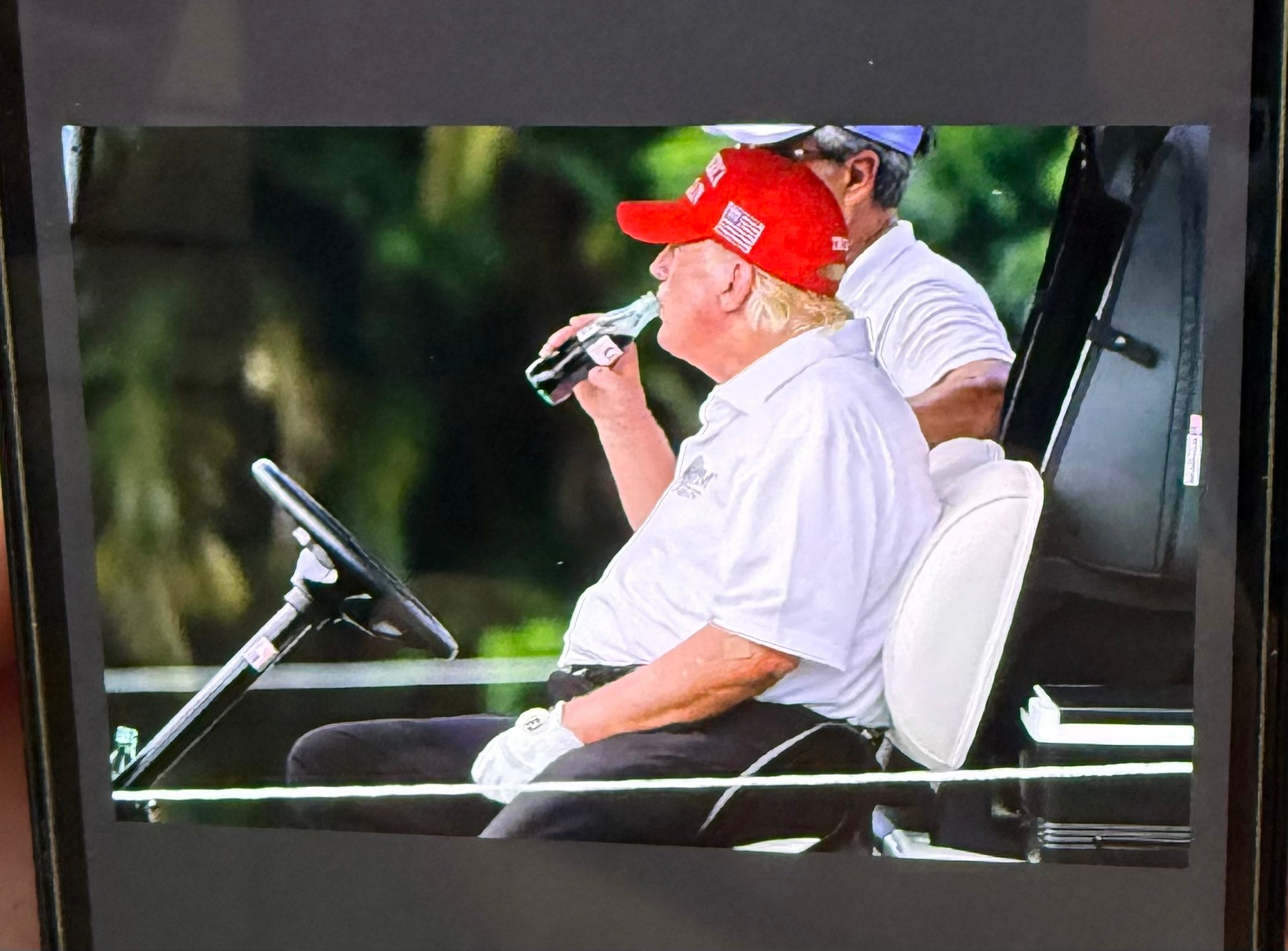
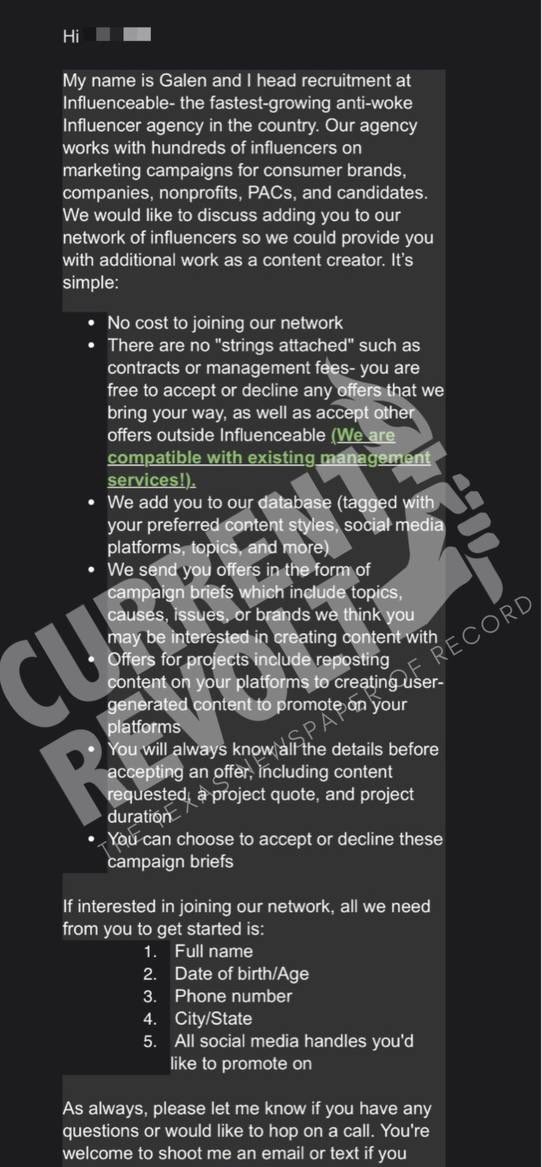
According to Sortor, Influenceable has “comfy” relationships with soda industry lobbying firms, such as the American Beverage Association and Americans for Food and Beverage Choice.
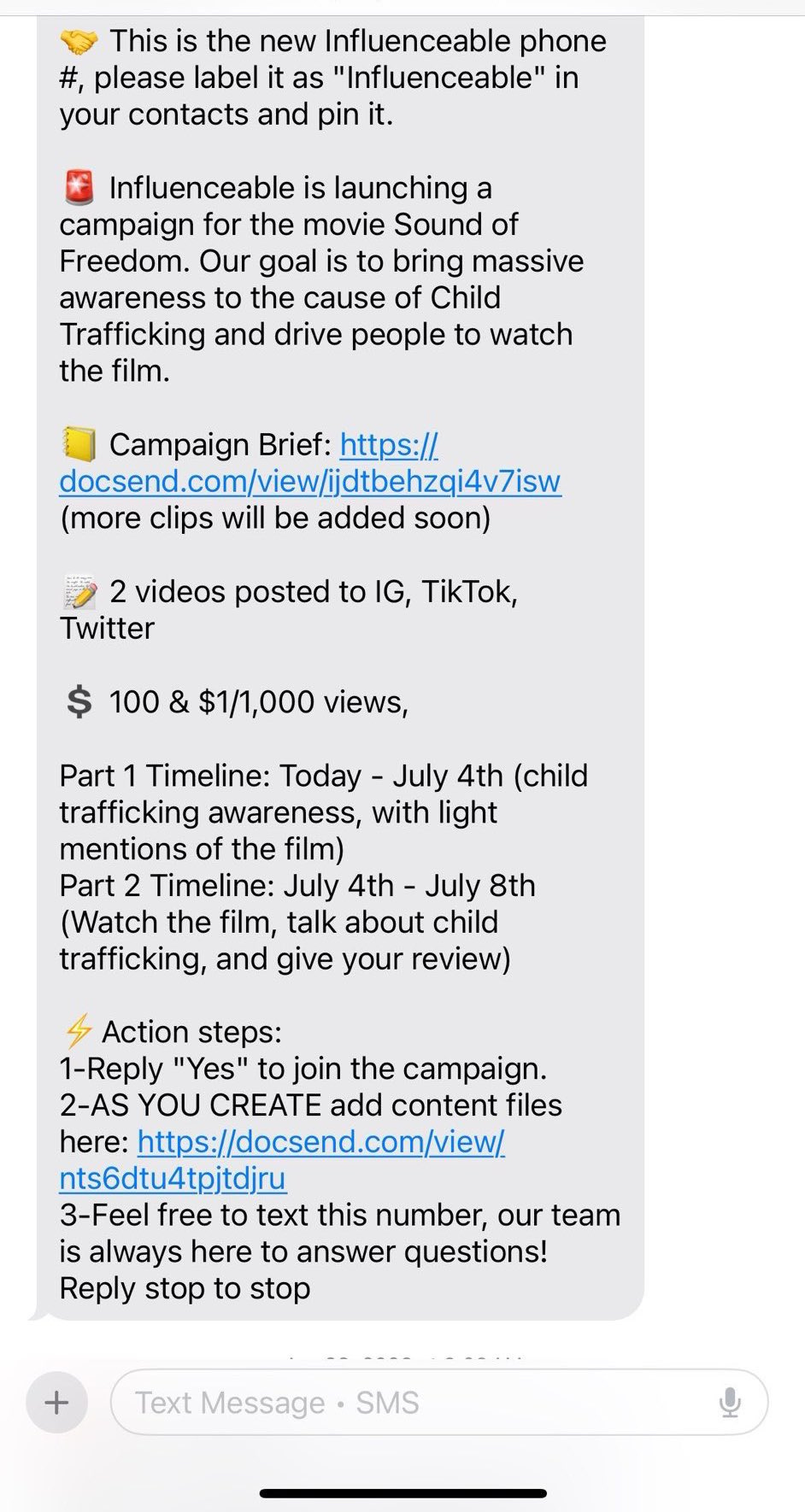
The “$1,000 and up” number is supposedly taken from previous campaign outreach programs undertaken by Influenceable:
As another user pointed out, this kind of “astroturfing” and paid endorsement is also potentially in violation of Twitter guidelines:
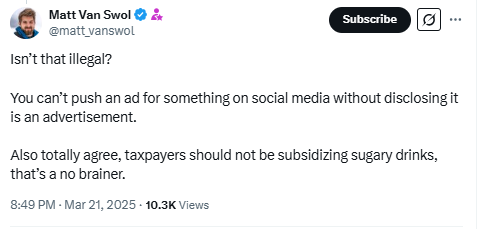
However, given the ambiguous, broad, and degrees-of-separation nature to the endorsements - we can’t be sure at this time which opinions are paid and which are genuine - it’s unclear whether this truly goes against Twitter’s guidelines against undisclosed or deceptive advertising, as well as its rules regarding political campaigning and lobbying.
The Soda Lobby vigorously opposes the recent proposed changes, and has been tirelessly lobbying the Trump administration to drop the proposal:
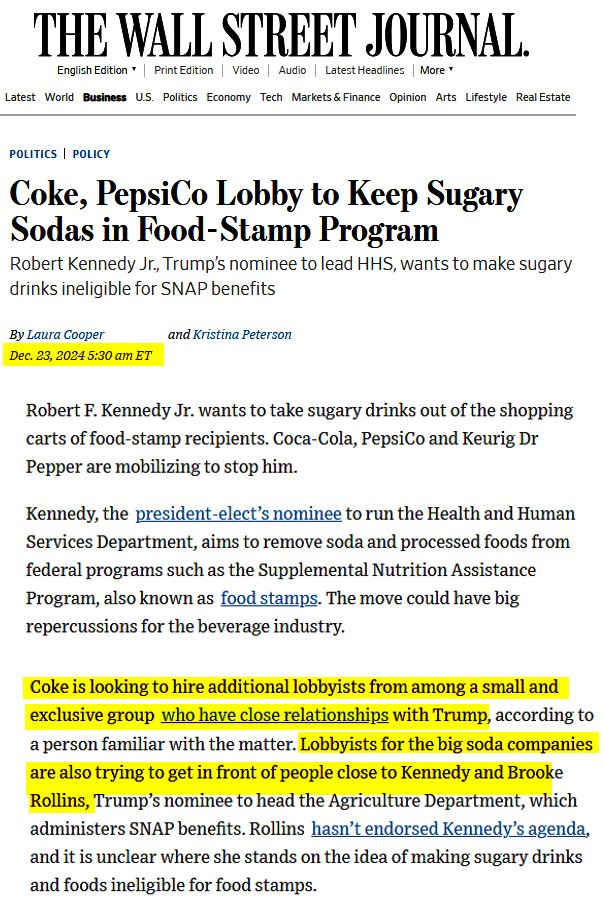
The Soda Lobby has killed similar proposed changes to SNAP rules before.2 In fact, the Soda Lobby using social media in particular isn’t even all that new; companies like Coca-Cola and PepsiCo have been accused of using social media to peddle manufactured support against soda taxes, SNAP changes, and other regulatory hurdles in 2023 (“Sponsored By Soda: Are Influencers Peddling Junk Science?”), 2022 (“How have media campaigns been used to promote and discourage healthy and unhealthy beverages in the United States?”), and in 2016 (“Is Coke Paying Dietitians To Tweet Against the Soda Tax?”), accusations going back at least 8 years.
In 2018, a paper published in the academic journal Society lamented the ongoing political battle between the soda industry and SNAP:
“As America’s obesity crisis worsens, why does our leading federal nutrition program, the Supplemental Nutrition Assistance Program (SNAP), continue to use taxpayer money to support the purchase of sugar-sweetened beverages, products that contribute to obesity while providing no nutrient value? Among many reasons, one surprising answer is the joining of pro-poor liberal conviction and corporate lobby power, supported by institutional inertia. The result is not a coherently reasoned outcome, but for multiple reasons it will be hard to change.”3
Ian Miles Cheong, Clown World, Eric Daugherty, and Not Jerome Powell did not respond our requests for comment on this story.
Fortune. "RFK Jr. Wants to Ban Candy and Soda from the SNAP Program." Fortune Well, February 19, 2025. https://fortune.com/well/2025/02/19/rfk-jr-snap-program-candy-soda-ban/.
Paarlberg R, Mozaffarian D, Micha R, Chelius C. KEEPING SODA IN SNAP: Understanding the Other Iron Triangle. Society. 2018 Aug;55(4):308-317. doi: 10.1007/s12115-018-0260-z. Epub 2018 Jun 13. PMID: 35095130; PMCID: PMC8797053.
Ibid.