


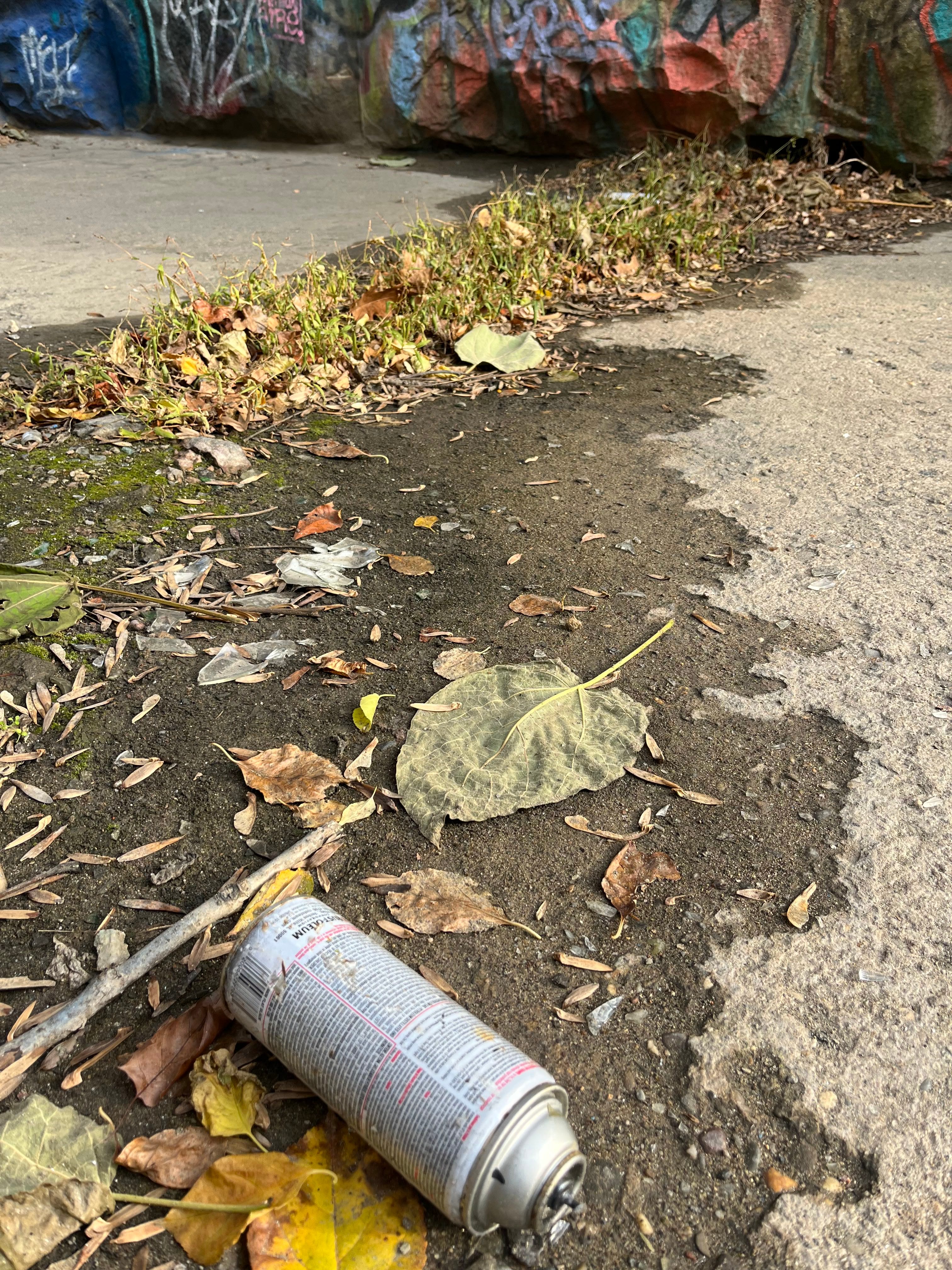
“Vandalism,” from the French vandalisme — coined in 1794 by the bishop Henri Grégoire to condemn the revolutionary mobs in France who were smashing statues and desecrating priceless artworks. For inspiration, he reached back in history to the 5th-century Vandals — the Germanic tribe that sacked Rome in 455 A.D. — to give the destruction an appropriately barbaric name.1
Over two centuries later, and the same term has far less dramatic connotations. These days, it’s broadly used to describe drawing over or interfering with property that doesn’t belong to you, or, really, any behavior your Boomer™ neighbor might not like. But what truly, exactly, qualifies as “vandalism” and what is “art” depends on who you ask, where you ask it, and when. The line between crime and culture, artist and vandal, has arguably never been thinner.
“Unlike traditional and institutionalized art forms, graffiti is rebellious and defiant, presenting a new form of art and creativity,” said Henry Zhou, a Los Angeles-based artist, in an interview with the Yale News.2
“At the same time, graffiti is vandalism, a crime, as it is an act of defacing public property without permission.”
“People express themselves in so many different ways artistically that I just consider [graffiti] another form of that,” said another artist, Shayla Waldron, also of Los Angeles.
“I’ve seen some amazing works of art done by graffiti artists.”
Yet, in a poll taken in 2014 by CBS, approximately 51% of Americans — a slim majority — do not consider graffiti a legitimate form of art.3
“No institution that has celebrated graffiti in recent years — like the Museum of Contemporary Art in Los Angeles or the Museum of the City of New York — would allow its own premises to be defaced for even one minute,” wrote Heather Mac Donald, a Thomas W. Smith Fellow at the Manhattan Institute and best-selling author, in one New York Times article.
“Graffiti is something that one celebrates, if one is juvenile enough to do so, when it shows up on someone else’s property but never on one’s own.”
Well, everyone’s got an opinion. But, irrespective of opinions, there is no disputing that graffiti has become fully cemented in American culture.
And, in fact, the City of Brotherly Love is partly responsible for that — though various types of graffiti have been around since ancient times, the colorful, dripping kind you recognize when you walk by the corner store or in some special news report about urban blight — modern graffiti is largely believed to have originated in Philadelphia, as well as New York, in the late ‘60s and early ‘70s.4 Eventually, it spread to the rest of the country and then the rest of the world.
And who said Americans had no culture?
From the Ancient Roman penis carvings pointing you to brothels, to the Great-Depression era “Hobo-codes,” the “Kilroy” etchings of World War Two, to gang tags, to the modern-day street artist, and everything in-between, graffiti has endured. And while this is not meant to be an exhaustive list of that enduring phenomenon, we have made our best attempt to capture some noteworthy art where we could find it.
Without any further ado, here is a snapshot of the art — or vandalism — of Northwest Philadelphia in 2026, before it gets painted over. Oh, and no tattling.
WALNUT LANE BRIDGE
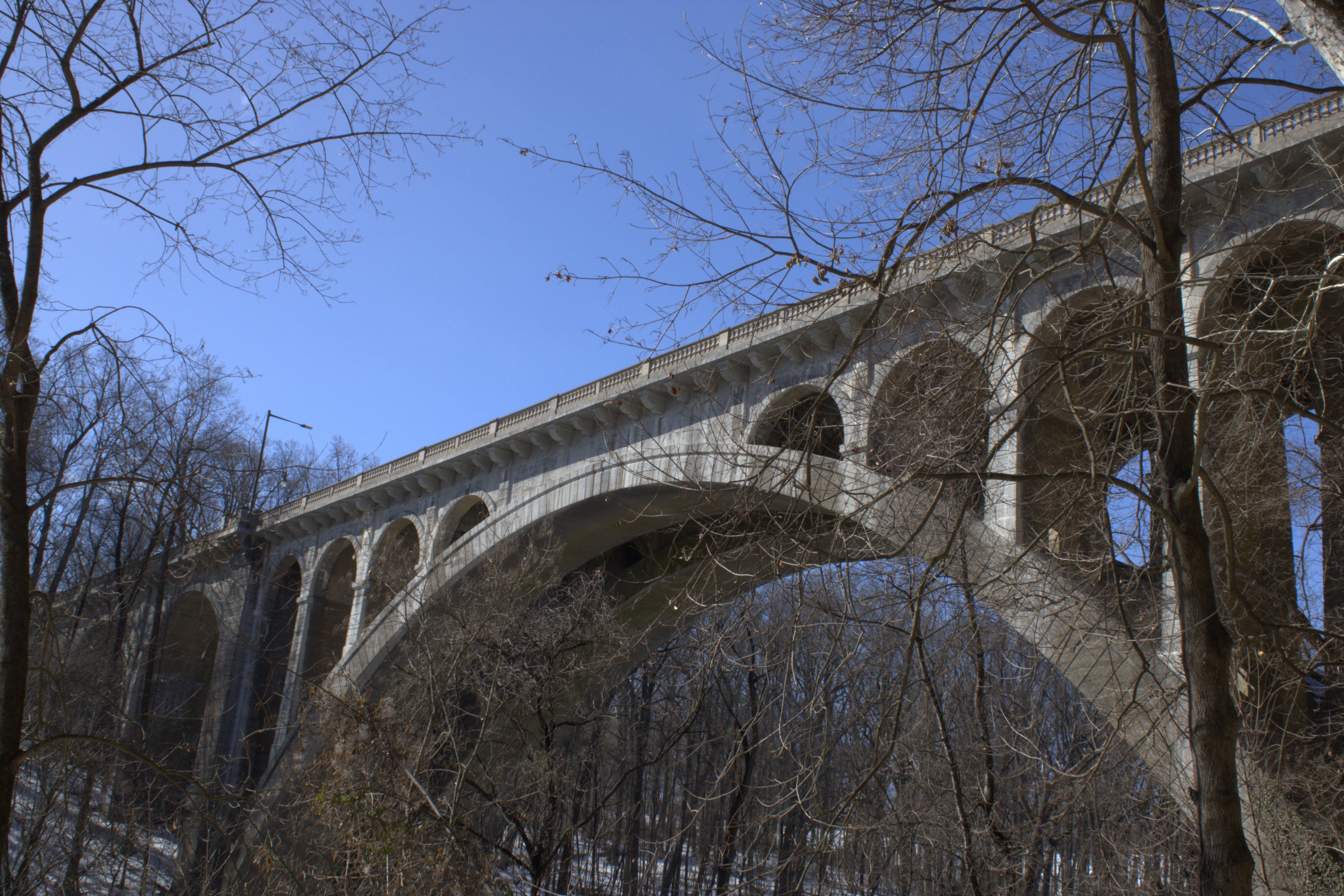
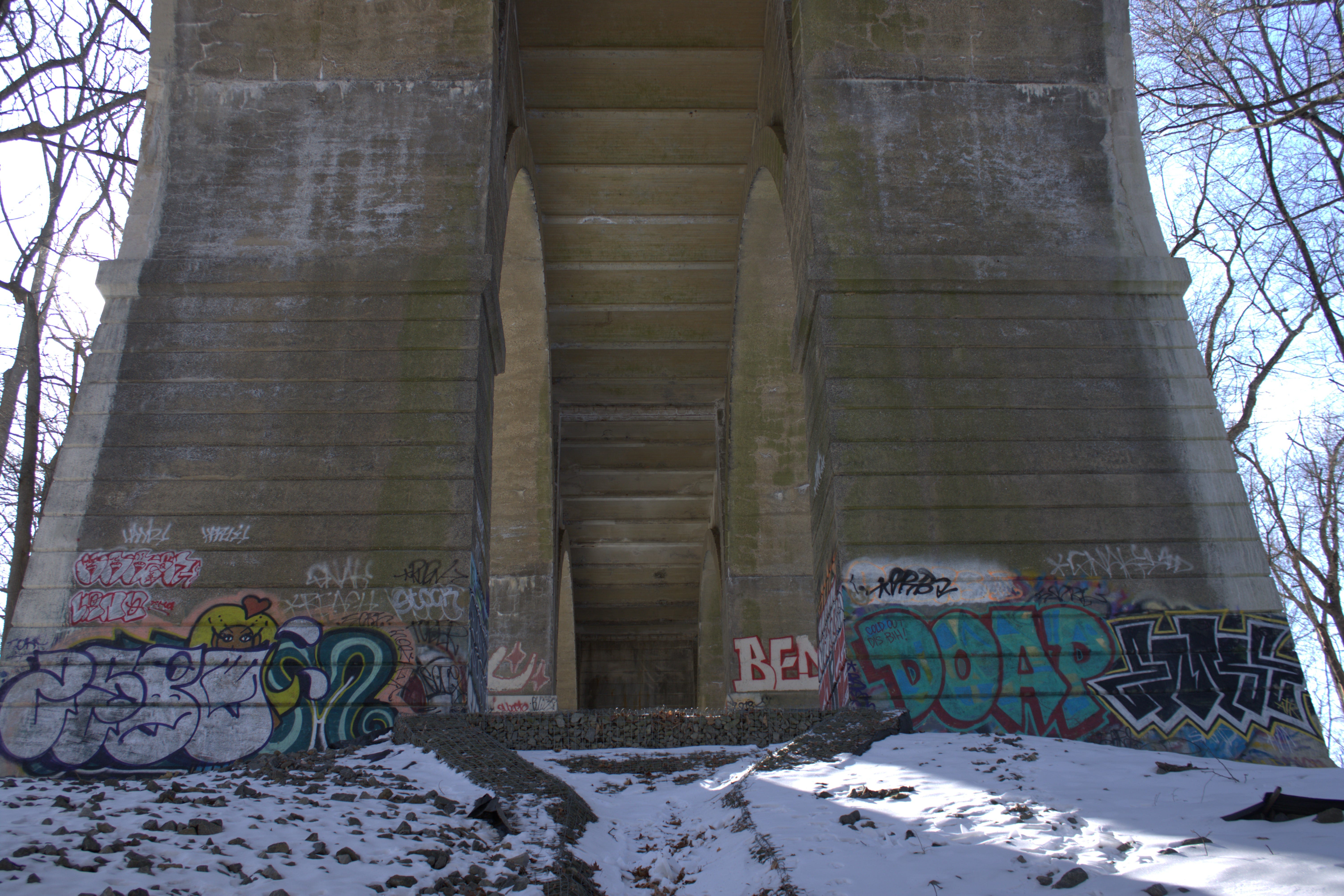
Sequestered away from the hustle and bustle of civilization, the wide and looming beige underbellies of the city’s network of bridges prove an attractive canvas for many an aspiring graffiti artist, where they can work in peace, quiet, and away from the watchful eye of the law. The Walnut Lane Bridge, connecting the Germantown and Roxborough neighborhoods and spanning the gap across the Wissahickon creek, is no exception. The Walnut Lane bridge may also hold the title as the most misidentified bridge in Philadelphia; it’s frequently confused for the Walnut Street bridge located in University City, the Henry Avenue bridge located just a few miles away above Lincoln Drive (also on this list), or the Walnut Lane Memorial bridge, located at the other end of Walnut lane and bearing a much more modern edifice, having been built circa 1951. The view, having inspired literary minds like Christopher Morley for decades, now serves a different type of writer.


THE CLIFFS
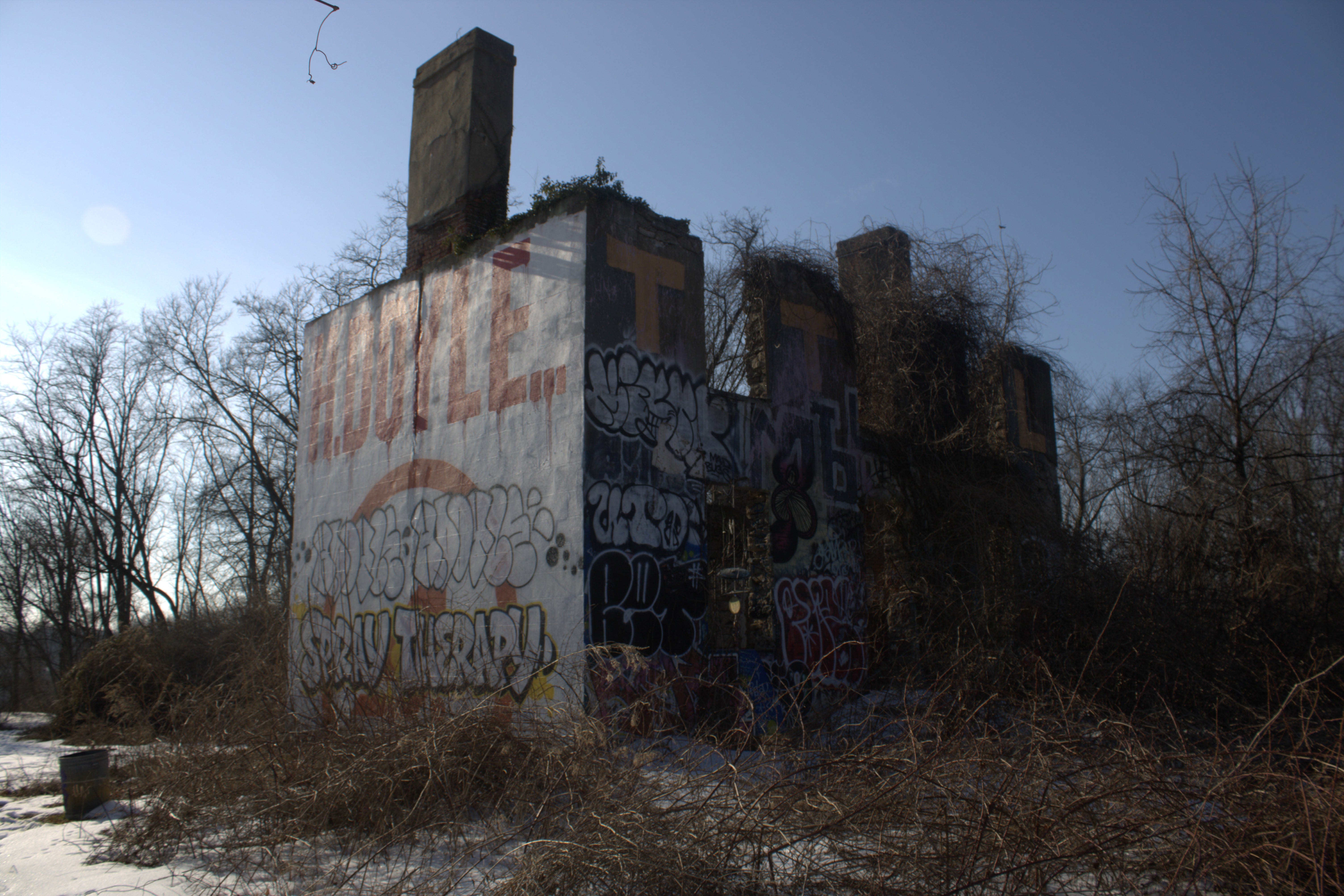
“The Cliffs” has become (have become?) so established in its role as a graffiti mecca that it even has its own location and reviews on Google Maps (five stars). Tucked away in the woodlands just off Kelly Drive, the Cliffs was the former Georgian-style country home of Joshua Fisher, a 18th century Philadelphia merchant and great-great grandfather of Joseph Wharton (of Wharton School infamy). During the Revolutionary War, it was used as a site to produce clothing and bandages for Continental soldiers. The home eventually came into the possession of the Fairmount Park Commission, who maintained it as a place for park officials to rent until the late 1960s. After 1970, the home was left vacant and unattended, quickly becoming a target of vandalism and mischief. In 1986, an act of arson left the structure heavily damaged and without a roof. Since then, it’s become something else entirely — a shrine to the unorthodox creativity of the city’s inhabitants.


COLUMBIA BRIDGE (ROWER’S GRAFFITI)
The Columbia bridge, upstream from Boat House Row on the Schuylkill river, speaks to the distinct pedestal the sport of rowing occupies in Philadelphia’s culture. Perpendicular to Kelly Drive (named after the Olympic Gold medalist rower John Kelly, and member of the famous Kelly family), you can often see the various collegiate rowers practicing, or on regatta days, racing, underneath its arches.
In their downtime, it seems like they also enjoy using their boating skills to graffiti in hard-to-reach areas of the Columbia bridge and the adjacent areas.


WISSAHICKON PARK
Located just off Lincoln Drive, and in one of the most historic sections of the city, it’s perhaps fitting that the Germantown area also has its fair share of graffiti artists striking out to leave their mark on the world.
Wissahickon Park offers hikers, bicyclists, and naturalists a beautiful respite from the chaos and smog of the concrete jungle. It also offers graffiti artists numerous opportunities to leave their calling card — of which they take full advantage.


HENRY AVENUE BRIDGE
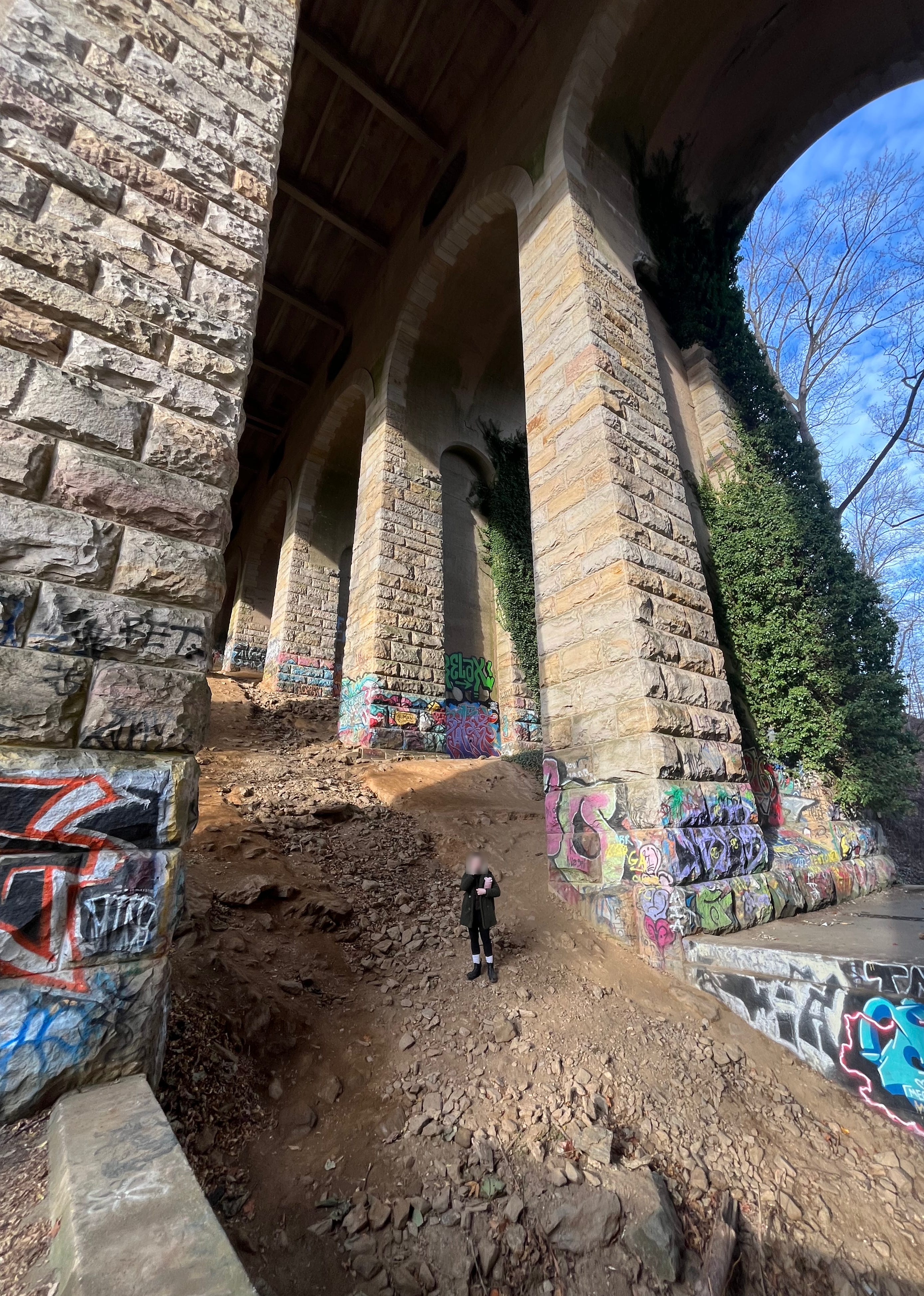
Though still technically a part of Wissahickon Park, the vast treasure trove of work under the Henry Ave Bridge merited its own section.
Like in the halls of a medieval castle, the pillars that hold up the Henry Avenue bridge tower above your head and converge to form massive arches; the graffiti acts like the tapestries that drape its walls.
You can find almost any type of graffiti you can think of at Henry Ave — your standard tags, throw-ups, and full color pieces, to wildstyle, calligraphy, insane ramblings that happen to be made in spray paint — it all has a home here.
It is a true, blue cathedral to the city’s passion for street art.


ALLEGHENY WEST
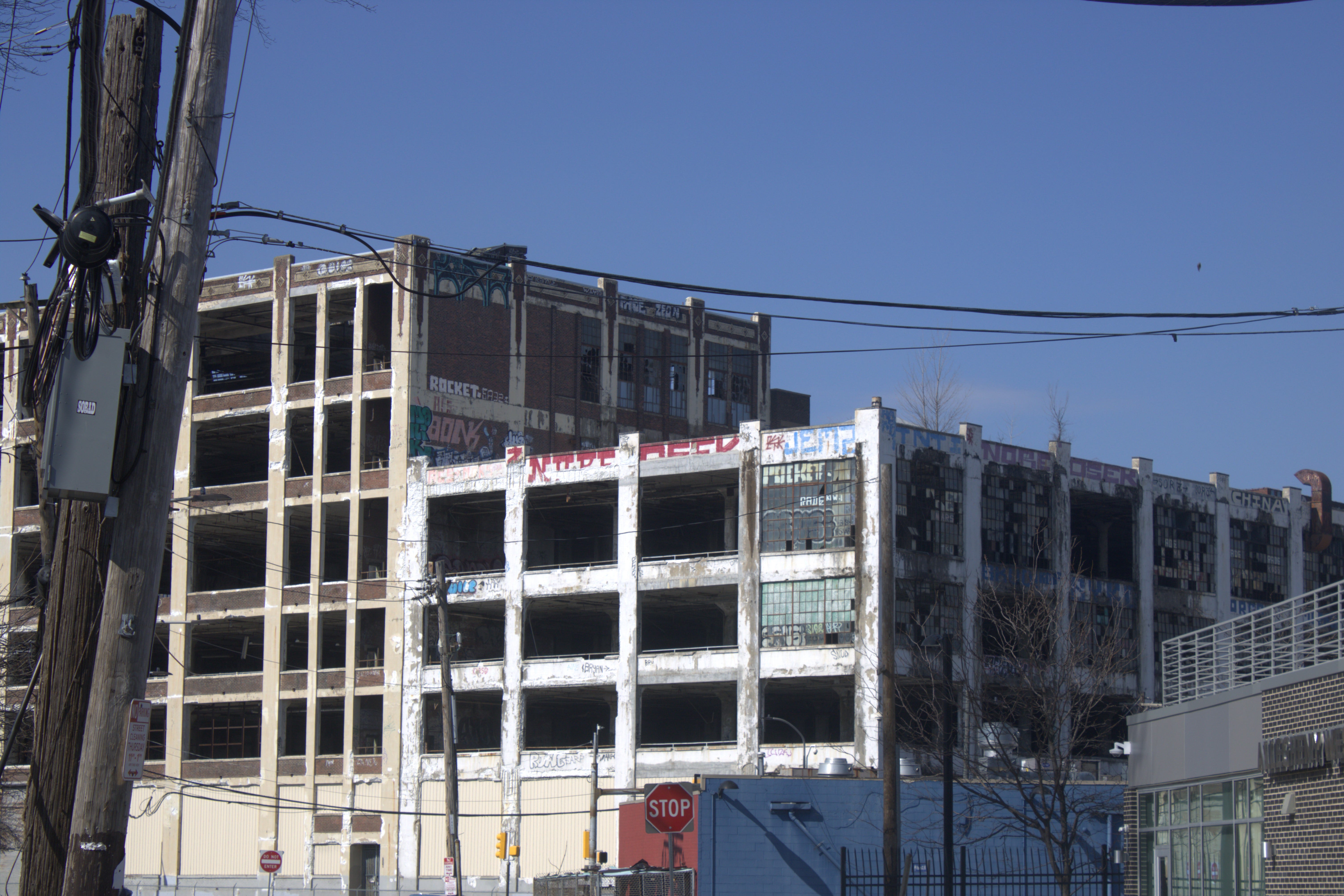
Once upon a time, the Allegheny West neighborhood was dotted by bustling factories, creating a populous and prosperous community sustained by a burgeoning industrial revolution. Most of the people are long gone, but the factories are still there, rusty graves to American industrial might during the 19th and 20th centuries. Though in recent years the city has accelerated its efforts to tear down abandoned industrial buildings in places like Allegheny West, there are still a number of them left — and with them, a happy breeding ground for graffiti.


EPILOGUE
We hope you’ve enjoyed the small selection of graffiti we’ve been able to document here. By the time you read this, a decent amount of these works very well may already be gone.
The city’s CLIP team (City Life Improvement Program) works fast. Credit where credit is due; they’re a part of city government that actually works. A new coat of battleship gray and it’s like it was never there. And that’s if the building it’s on is still standing there the next time you visit.
Philadelphia has spent decades trying to scrub its name off the graffiti map, mural programs and all, but it seemingly just can’t quit the artform. PennDOT recorded nearly $130,000 spent removing graffiti from state highways in and around Philadelphia in 2023 alone — not that you could likely tell the difference.
At this stage of the game, we can call it; the writers have surely won. Again, no tattling, please. Go see it before the buff comes!
https://en.wiktionary.org/wiki/vandalism
https://yaledailynews.com/sjp/2022/08/26/is-graffiti-art-or-vandalism-yes/
https://www.cbsnews.com/news/cbs-news-poll-is-graffiti-art/
Caves, R. W. (2004). Encyclopedia of the City. Routledge. p. 315.